Beyond GDP: Rethinking Prosperity in Luxembourg
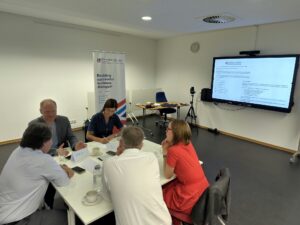
Reflections from the BCC Sustainability Group “Beyond GDP” Roundtable, 29 September 2026
Luxembourg regularly ranks among the world’s wealthiest countries. By conventional economic measures, it is a remarkable success story. Yet a simple question formed the basis of a recent roundtable discussion: if GDP alone does not define prosperity, what should Luxembourg prioritise, measure and invest in by 2030?
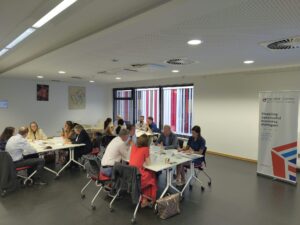
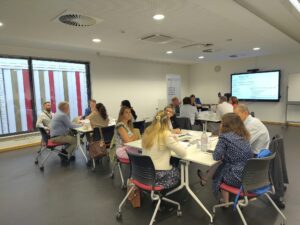
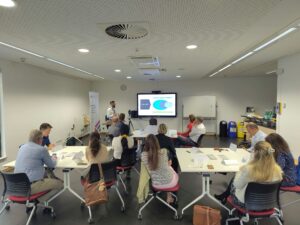
The discussion brought together participants from different backgrounds and perspectives, who worked in small groups to look at Luxembourg’s future through three lenses: business and economy, public policy and institutions, and people and communities. While opinions differed on specific policies, a surprising degree of consensus emerged around one central idea: prosperity is not a destination measured by economic output alone. Rather, it is the ability of a society to maintain long-term economic success while simultaneously improving human wellbeing, health, social protection, social cohesion and future resilience.
Luxembourg’s historical strength: reinventing itself
A recurring theme throughout the evening was Luxembourg’s remarkable ability to adapt. From steel and mining to finance, from digital services to space-related activities, the country’s prosperity has never depended on a single industry. Instead, it has repeatedly identified emerging opportunities before many larger nations and positioned itself at the forefront of economic change. This adaptability may be Luxembourg’s most valuable asset.
Participants argued that future prosperity will depend less on protecting existing industries and more on maintaining the capacity to anticipate the next wave of economic transformation. In a world shaped by artificial intelligence, automation, demographic change and climate transition, Luxembourg’s challenge is not merely to stay competitive today, but to understand where value will be created twenty or thirty years from now.
Reinvention, however, has a human side. Transformation creates new opportunities, but it also brings restructuring and job losses. Participants pointed out that, for the families affected, losing a job can mean a change of life rather than simply a change of employer. This is especially true for those who are not originally from Luxembourg and may have fewer family and social networks to fall back on. A country that prides itself on its ability to adapt must also make sure that people are supported through the transitions that adaptation requires.
People: attracting, retaining and developing talent
Luxembourg’s economy depends on people from elsewhere. Nearly half of its residents are foreign nationals, and more than 230,000 cross-border workers commute into the country, so the large majority of the workforce is not Luxembourgish. The country needs to keep attracting, retaining and developing international talent, while also investing in the people who are already here, including those who have recently lost their jobs.
Several participants were critical of how the labour market currently works. Some felt that case law in employment matters tends to favour employers, while lengthy delays in the judicial system mean that, in practice, protection against unfair dismissal is limited. Young people and workers over 50 were described as finding it particularly hard to secure employment.
One consequence is that many people turn to self-employment and entrepreneurship. A good number of the roundtable’s own participants are independent or considering it. Entrepreneurship is a source of dynamism, but participants also noted the high number of business failures and a lack of transparency around bankruptcies. This raises a difficult question: can everyone become independent, and what kind of social protection would make that a sustainable path?
Prosperity means more than wealth
Although participants recognised the importance of economic growth, few considered financial success sufficient on its own.
Several dimensions of prosperity emerged repeatedly:
Many of life’s most valuable experiences do not require significant financial resources. Walking in nature, spending time with family, participating in community life and engaging in creative pursuits often depend less on money than on having sufficient time and opportunity. This suggests a broader understanding of prosperity: not simply having more, but having the capacity to live well.
Community, belonging and social cohesion
With nearly half of residents being foreign nationals, many people feel disconnected from their roots and from their traditional support networks of family and friends. Many participants felt that people can work in Luxembourg, and even obtain citizenship (one of the country’s real advantages), yet still not feel that they belong here, which weakens social cohesion. Creating more opportunities for community involvement, to meet neighbours and people from different walks of life and backgrounds, not just work colleagues engaged in similar activities, would help build social cohesion and a real sense of belonging in Luxembourg.
The importance of time
Among the most interesting ideas raised during the discussion was the role of time as a measure of prosperity. Economic indicators typically measure production, income or consumption. However, they rarely ask whether people actually have time to enjoy the benefits of prosperity. If technological progress continues to increase productivity, participants questioned whether the ultimate objective should be greater output or greater freedom. Should success be measured by the number of hours worked, or by the ability of individuals to choose how they spend their time?
This perspective shifts attention from growth alone towards a more human-centred question: Does economic progress create more opportunities for meaningful living?
By 2030, Luxembourg could aspire to become a leader in measuring not only economic performance but also time wellbeing: the extent to which people have the freedom to balance work, family, learning, health and civic participation.
Health: the dimension we cannot ignore
Health, and mental health in particular, emerged as one of the most significant themes of the evening. Participants spoke about depression, a loss of meaning at work, and the role that management practices play in people’s wellbeing. These concerns are reflected in the data: recent figures from the IGSS (Luxembourg’s General Inspectorate of Social Security) show that depression has become the leading cause of sick leave among private-sector employees living in Luxembourg, accounting for 17.5% of sick-leave days in 2025, up from 14.6% in 2016.
At the same time, participants highlighted a shortage of health professionals, which can make it difficult to access timely support. This raised questions that go beyond healthcare budgets. Is the rise in mental ill-health simply a twenty-first-century phenomenon, or is it linked to economic pressures, working conditions, the environment or the pace of change? STATEC is working to understand these connections. Whatever the answer, a prosperous society is one in which people are healthy enough to enjoy the opportunities it creates.
Education as the foundation of future prosperity
If there was one topic that united nearly all participants, it was education.
Education was viewed not merely as preparation for employment but as the foundation for resilience in a rapidly changing world. With artificial intelligence transforming professions and reshaping labour markets, technical skills alone may no longer be sufficient.
Participants consistently highlighted the importance of:
Particular concern was expressed about misinformation, social media’s influence on attention and decision-making, and the pace of technological disruption. Rather than attempting to define what constitutes a good life for citizens, education should equip individuals with the tools to make informed choices for themselves. In this sense, education becomes more than an economic investment. It becomes an investment in democratic resilience, social cohesion and personal agency.
Some participants also raised concerns about the level of education itself. The latest PISA results, published in September 2026, show Luxembourg’s 15-year-olds scoring below the OECD average in reading, mathematics and science, with reading showing the sharpest decline since 2018, even as students performed above average in the new computational problem-solving assessment. Luxembourg’s education authorities have linked part of the decline to heavy smartphone and social media use, echoing the concerns raised during the evening. If education is the foundation of future prosperity, strengthening core skills such as reading comprehension must sit alongside critical thinking and adaptability.
Growth, but not at any cost
While few participants argued against growth itself, many questioned whether it should remain the primary objective without due consideration of its wider consequences.
The discussion highlighted the importance of balancing economic dynamism with:
Several participants suggested that Luxembourg’s future success should be measured not by growth alone but by sustainable growth: economic progress that strengthens society and preserves opportunities for future generations.
This requires recognising trade-offs. Economic expansion may generate new opportunities but can also place pressure on housing, infrastructure, social cohesion and the environment. Prosperity therefore depends on managing these tensions rather than ignoring them.
The financial sector, the backbone of Luxembourg’s economy, also came under scrutiny. Participants raised concerns about the credibility of some “green” funds (those classified as Article 8 or Article 9 funds under the EU Sustainable Finance Disclosure Regulation), warning of the risk of greenwashing where controls are insufficient, although recent EU-level initiatives aim to reduce that risk. For a country that aims to be a leading centre for sustainable finance, robust standards and oversight are not a constraint on growth but a condition for long-term credibility.
Measuring what matters
A central challenge identified during the roundtable was measurement. GDP remains a useful indicator. It tells us something important about economic activity. But participants repeatedly noted that it cannot reveal whether:
Future measurement frameworks should therefore combine economic indicators with social and human-centred metrics. The objective should not be to replace GDP, but to place it within a broader dashboard of national success.
Luxembourg already has a starting point. STATEC’s PIBien-être framework, the Luxembourg Index of Well-being, tracks dimensions of quality of life that GDP does not capture. The question raised by participants was how to make such indicators matter in practice.
Prosperity for whom?
Participants also cautioned that national averages can hide very different experiences, particularly in a country as diverse as Luxembourg. A resident with a secure job and a home is likely to experience prosperity very differently from a cross-border commuter (including young Luxembourgers who have settled across the French border), a newly arrived family, a young person looking for a first job, or someone over 50 who has just been made redundant. Measuring what matters therefore also means asking prosperity for whom, and looking beyond the average to see who is being left behind.
From measurement to action
From the outset, the roundtable aimed to connect discussion with action. Measuring prosperity more broadly is only valuable if those measures shape decisions. Participants asked how wellbeing indicators could genuinely influence policy priorities, public spending and investment decisions, and what Luxembourg would do differently if it took these dimensions of prosperity as seriously as GDP.
The health data offers one example. If depression is now the leading cause of sick leave, what does that mean for budgets, for the availability of mental health support, for training and attracting more health professionals, and for how organisations are managed? Similar questions could be asked about housing, educational outcomes, labour market protection and the credibility of sustainable finance. For businesses as well as policymakers, the challenge is to turn indicators into priorities, and priorities into concrete action.
A Vision for Luxembourg 2030
Perhaps the strongest conclusion from the discussion was that prosperity should be understood as balance.
A prosperous Luxembourg in 2030 would be:
Importantly, success would not require choosing between economic performance and human wellbeing. The most compelling vision presented during the evening suggested that these objectives reinforce one another. A society that invests in education, trust, resilience and quality of life is also better positioned to remain economically successful.
Conclusion
The roundtable did not produce a single definition of prosperity, nor was that its purpose. Instead, it highlighted a broader shift in thinking.
For much of the twentieth century, prosperity was often equated with economic growth. Today’s challenges suggest a more nuanced understanding. Wealth still matters. Competitiveness still matters. Innovation still matters. But prosperity increasingly depends on whether economic success translates into security, health, opportunity, purpose, agency and quality of life for everyone who lives and works in Luxembourg, not just on average.
Luxembourg’s advantage has always been its ability to adapt to change. The next step may be to apply that same spirit of innovation not only to its economy, but also to how it defines, measures and acts on success itself.