How Do You Live in a Box That You Don’t Fit Into?
British Chamber of Commerce in Luxembourg hosts a Kitchen Table Conversation on neurodiversity in leadership and the workplace
Written by Claudia Neumeister, Vice Chair, British Chamber of Commerce Luxembourg
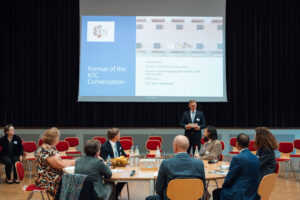
On 24 September, the British Chamber of Commerce in Luxembourg’s People & Leadership Group welcomed around 70 guests to the International School of Luxembourg for an evening dedicated to one of today’s most important leadership conversations: neurodiversity.
Entitled “How do you live in a box that you don’t fit into?”, the event deliberately moved away from the traditional panel format. Instead, moderator Virginia Anderson guided a Kitchen Table Conversation: an open dialogue where lived experience, professional expertise and genuine curiosity took precedence over prepared speeches. Rather than seeking definitive answers, the aim was to explore different perspectives and encourage everyone in the room to join the conversation.
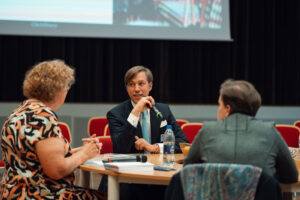
The discussion brought together an exceptional group of contributors. H.R.H. Prince Louis of Luxembourg shared his personal experience with dyslexia and his advocacy for greater understanding of neurodiversity. He was joined by Dr Michel Rayman, Andrew Zacharias, Alexia Hetzel, Tess Allwright and Toby Higson, whose diverse professional and personal perspectives demonstrated that there is no single lens through which to understand neurodiversity.
One of the evening’s strongest messages was that neurodiversity is not simply an HR or educational issue: it is fundamentally a leadership issue. Organisations that recognise and value different ways of thinking are better positioned to innovate, solve complex problems and create environments where people can perform at their best.
Dr Michel Rayman spoke candidly about the challenges he faced before understanding how his mind worked, setting a tone of honesty and openness for the evening. He also mentioned the importance of benchmarking and having quality data to support organisational change.
Throughout the conversation, the panel encouraged leaders to replace assumptions with curiosity. Virginia Anderson suggested asking simple but powerful questions such as: “What is your learning style?” “How do you function?” and Alexia Hetzel added, “How do you remember?” These questions help uncover an individual’s unique strengths: their “superpowers.”
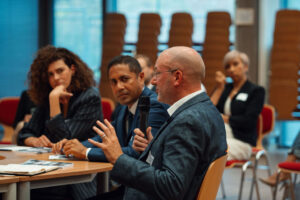
Prince Louis encouraged organisations to understand what individuals need and implement solutions accordingly, noting that many adjustments introduced for people with dyslexia ultimately make life easier for everyone.
Andrew Zacharias highlighted how thoughtfully designed workplaces can better support different sensory and cognitive needs, improving wellbeing, collaboration and performance.
Alexia Hetzel highlighted that many neurodivergent professionals remain hesitant to disclose their condition because they fear misunderstanding or stigma. She argued that coaching should become more neuro-informed, benefiting not only neurodivergent individuals but everyone.
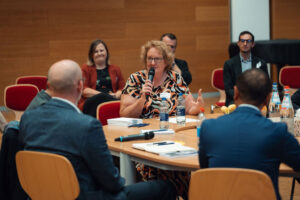
Tess Allwright brought the educational perspective. Drawing on nearly two decades in Montessori early years education, where understanding children’s needs is key to adapting and preparing the optimal learning environment, she reflected on the importance of recognising different learning profiles early and supporting young people as they transition into adulthood and the workplace.
Toby Higson, a neurodiverse coach in Luxembourg, added perspective from his coaching work with neurodiverse clients in the UK and how Luxembourg can learn from the UK’s progress. He also spoke about how social norms can really create boxes that deter conversation.
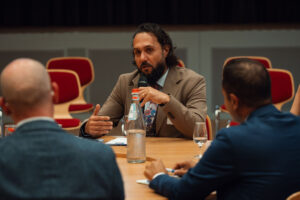
An audience question about helping neurodivergent children transition successfully into adult life sparked a particularly engaging discussion. Prince Louis described this as a key challenge that deserves greater attention, emphasising the need for continued collaboration between education, employers and society.
The panel also explored the role of artificial intelligence. While acknowledging the challenges it presents, speakers agreed that AI can reduce repetitive tasks and free people to focus on creativity, problem-solving and human connection. Used thoughtfully, it can become an important enabler of inclusion.
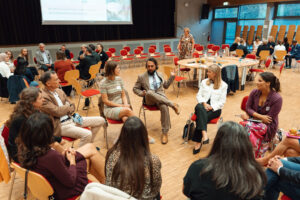
During the closing reflections, participants identified practical actions organisations can take: moving away from over-standardisation, focusing on outcomes rather than rigid processes, investing in psychological safety, and recognising that inclusive workplaces strengthen both employer branding and organisational performance. Representation and visible role models were also recognised as essential in creating cultures where people feel able to bring their authentic selves to work.
Ultimately, the conversation showed that supporting neurodivergent individuals is not about creating exceptions: it is about designing better organisations. As several speakers observed throughout the evening, many practices originally introduced for neurodivergent colleagues ultimately improve the working environment for everyone. The Kitchen Table Conversation showed that better leadership begins with better conversations and that understanding neurodiversity means recognising human potential in all its diversity.